










Publications > Report
Report on the role of UNESCO Sites in climate and biodiversity agendas includes technical input from IIS
A report released by UNESCO highlights how the more than 2,260 sites designated as World Heritage Sites, Biosphere Reserves, and Global Geoparks by this UN agency are strategic for biodiversity conservation and addressing climate change. The study “People and Nature in UNESCO-Designated Sites: Global and Local Contributions” also reveals the main threats and the actions needed to protect and restore these sites.
Among the priority actions is ecological restoration, since, according to the report, 40% of UNESCO sites are critically degraded. The section dedicated to ecological restoration had the technical collaboration of Alvaro Iribarrem, Agnieszka Latawiec, Bernardo Strassburg, and Bruna Pavani, from the IIS. In it, the study highlights the benefits for biodiversity and carbon sequestration that large-scale restoration can promote in these locations.
Approximately 150,000 km² of degraded forest landscapes located within these sites have restoration potential, which could facilitate the storage of 1.2 gigatons of carbon (GTC C) over the next 30 years. Sustainable land-use practices could contribute to sustained biodiversity gains of about 1% per decade.
“This groundbreaking UNESCO report conveys a very relevant message: the importance of scaling up ecological restoration in areas that are fundamental to biodiversity conservation, addressing climate change, and, consequently, also to people’s well-being,” states Alvaro Iribarrem of the IIS.
The researcher points out that 80% of the potential for scaling up restoration lies in Biosphere Reserves, as the study indicates. “One example of a Biosphere Reserve is the Atlantic Forest, a biome that has historically suffered from deforestation and urban expansion. It has been the focus of many restoration initiatives, but there is still much to be done for the activity to gain scale and deliver the desired benefits for people and nature.”
UNESCO sites combined total more than 13 million km² and encompass over 60% of the world’s mapped species. More than 900 million people also live in these areas. These areas also store about 240 gigatons of carbon—a volume equivalent to nearly two decades of current global emissions—and the forests in these sites account for about 15% of the carbon absorbed by all the world’s forested areas.
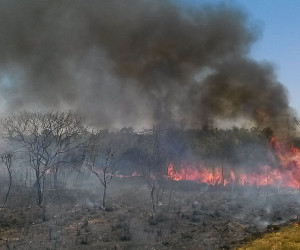
However, nearly 90% of these sites face high levels of environmental stress, and risks related to climate change have increased by 40% over the past decade, the report states.
To address this situation, the report proposes scaling up actions through priority areas, such as restoring ecosystems to rebuild resilience, promoting greater cross-border cooperation, integrating sites into global climate plans, and governing in a more inclusive manner, in partnership with indigenous peoples and local communities.
Here are the key points on ecological restoration from the report:
- UNESCO sites represent a largely untapped opportunity to scale up ecological restoration and improve ecosystem connectivity.
- With approximately 40% of sites degraded to alarming levels, restoration must be integrated as a central objective in management plans and monitoring systems.
- There is the potential to restore approximately 150,000 km² of degraded forest landscapes. This action could sequester 1.2 gigatons of carbon (GTC C) over the next 30 years.
- Targeted restoration of approximately 460,000 km² of low-yield or degraded agricultural lands and pastures can deliver climate and biodiversity benefits without compromising food production or local livelihoods.
- Sustainable land-use practices could contribute to sustained biodiversity gains of about 1% per decade at UNESCO sites.
- To be effective, restoration must be socially inclusive and participatory, involving indigenous peoples and local communities, and ensuring that decisions take into account food security and traditional livelihoods.