



News > News
29.03.26
IIS promotes debate on soil quality at event at Pontifical Catholic University of Rio de Janeiro with more than 115 participants
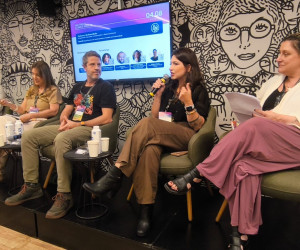
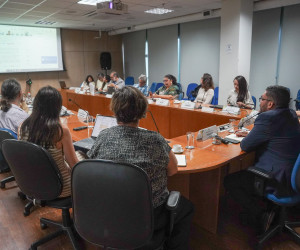
On 18 March, the Loyola Centre at Pontifical Catholic University of Rio de Janeiro hosted the first edition of the outreach event entitled “What the eyes cannot see, science reveals.” The event focused on raising awareness of soil, water and air quality, and their impacts on health and quality of life.
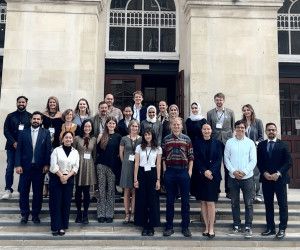
The initiative brought together IIS professionals, including Dr Agniezska Latawiec, the Institute’s current Director of Science, as well as Lucia Sousa, Daniela Neves, Antonino Netto, Adriano Tamm and Thainá Gulias.
The event was held in collaboration with the Atmospheric Chemistry laboratories and the Institute for Sustainable Mobility and Energy (IMES), as well as postgraduate students from the Professional Master’s in Sustainability Science. In total, more than 115 people took part, including 96 older adult learners.
The event also featured participants from the Knowledge Hub of Engenhão and the Academia Carioca Programme, from the João Barros Barreto Municipal Health Centre, fostering an intergenerational exchange centred on science and environmental education.
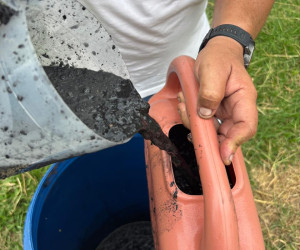
Throughout the programme, practical and interactive activities were carried out, such as real-time air and water quality analyses, as well as planting workshops using different soil conditioning techniques, including the use of biochar.
The event was also certified as Net Zero, with measures aimed at reducing and offsetting carbon emissions, reinforcing the commitment of the institutions involved to sustainability.
The event producer, Lucia Sousa, who works in the Institute’s administrative area, highlighted the importance of outreach in building collective knowledge: “Outreach is not only about teaching — it is about listening, sharing results, and bringing the realities of communities into workshops. We deal with different realities and challenges. For this reason, it is an exercise in responsibility, in empathetic education, and in building for and through well-being.”