





News > News
05.06.26
On World Environment Day, learn more about El Niño in 2026
You have probably already received a post or seen a news story warning about the arrival of El Niño next semester? Many publications have portrayed the phenomenon as a “catastrophe” or even “the worst in history.” But what does science actually say? Are we really facing a calamity?
But first: do you know what El Niño is?
El Niño is a natural climate phenomenon characterized by the abnormal warming of surface waters in the Equatorial Pacific Ocean. It is part of the climate cycle known as ENSO (El Niño–Southern Oscillation), which alternates between warming phases (El Niño), cooling phases (La Niña), and neutral conditions.
These changes affect rainfall and temperature patterns in many parts of the world. An important point is that El Niño does not produce the same effects everywhere, bringing increased rainfall to some regions while contributing to higher temperatures and drought conditions in others.
Why is there so much attention on the 2026 El Niño?
The world’s leading meteorological centers have observed increasingly consistent signs of warming in the Equatorial Pacific, indicating a strong likelihood that El Niño will develop by the end of this year. However, its magnitude remains uncertain—and alarmist narratives can distort the climate debate.
The U.S. National Oceanic and Atmospheric Administration (NOAA) estimates an 82% probability that El Niño will develop this year, with peak intensity expected between December 2026 and February 2027. In addition, some climate models suggest the possibility of a very strong event during this period. This has led parts of the media and social networks to use expressions such as “super El Niño” or “the strongest in decades.”
What could make this El Niño more intense?
The main factor highlighted by scientists is global warming. According to physicist Paulo Artaxo, a researcher at the University of São Paulo (USP) and one of Brazil’s leading climate change experts, rising ocean temperatures can intensify events that would otherwise be considered moderate. “An El Niño that would have been relatively weak can become very strong because of ocean warming,” the researcher stated in an interview with Valor Econômico.
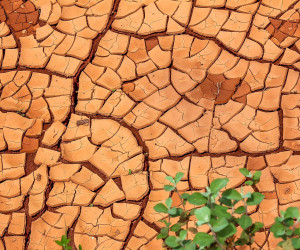
Oceanographer Regina Rodrigues, a researcher at the Federal University of Santa Catarina (UFSC) and an IPCC contributor, notes that recent events demonstrate how global warming can amplify the climate impacts of El Niño. According to her, the historical pattern across Brazil remains broadly the same: increased rainfall in the South, drought conditions in the North and Northeast, and heightened wildfire risk in the Central-West. However, in a warmer planet, these effects tend to become more severe.
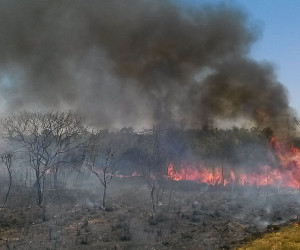
The last major episode, between 2023 and 2024, was associated with extreme drought in the Amazon, historic flooding in Rio Grande do Sul, and widespread fires in the Pantanal.
What is being exaggerated?
Climate models operate with probabilities and scenarios. Despite current projections, experts emphasize that it is still too early to determine how intense this year’s El Niño will be.
Although the phenomenon alters atmospheric patterns, droughts, floods, and heatwaves also depend on a range of other climatic factors, creating additional uncertainty in projections.
What can be done to reduce impacts?
Experts argue that uncertainty does not mean a lack of preparedness. Climate adaptation must take place before disasters occur, not only during emergencies. The discussion should therefore focus not only on alarming risks but also on opportunities and capacities for adaptation within cities and territories.
Recommended measures include:
- Developing risk maps;
- Improving urban drainage systems;
- Protecting natural areas;
- Training communities on evacuation routes;
- Conserving green spaces to absorb rainwater;
- Adapting agricultural planning to periods of drought or excessive rainfall.
Many of these actions provide long-term benefits, reducing their relative cost over time while minimizing the human, environmental, and economic damages caused by extreme weather events.
How Nature-based Solutions can help
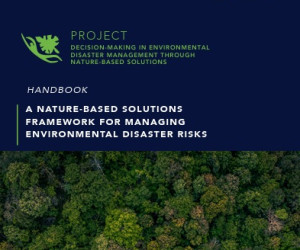
Nature-based Solutions (NbS) are gaining increasing importance as climate adaptation tools. In this context, the publication Handbook: A Nature-Based Solutions Framework for Managing Environmental Disaster Risks, developed by IIS, presents strategies for risk reduction and environmental disaster prevention.
In addition to the guide, the publication includes a case study demonstrating how the conservation and restoration of ecosystems, when implemented in priority areas, can help reduce flooding, landslides, and urban heat islands—potential impacts associated with El Niño and climate change.
Beyond reducing vulnerabilities, these solutions also contribute to strengthening urban resilience and protecting biodiversity, particularly in scenarios involving prolonged droughts and intense rainfall.
Climate adaptation does not depend solely on major infrastructure projects. It also requires environmental conservation, territorial planning, and collaboration among science, public authorities, and local communities.
Scientific information is not alarmism
Monitoring the climate, including conditions in the Pacific Ocean, helps improve civil defense systems and provides advance information that enables farmers, local governments, the private sector, and civil society to prepare more effectively. However, experts emphasize the need for caution in climate communication. Turning probabilistic projections into absolute certainties can generate misinformation and may even undermine public trust in scientific forecasts.