






News > News
10.07.26
Technical workshop discussed fire risk modeling applied to environmental restoration
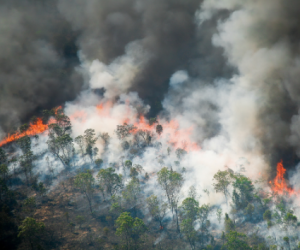
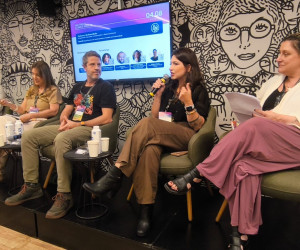
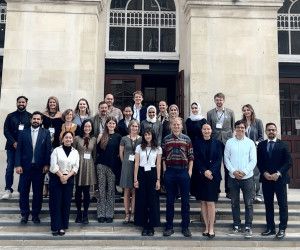
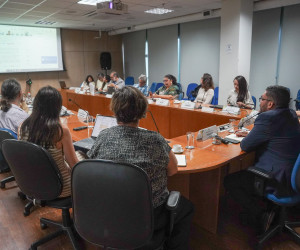
How can fire risk be incorporated into environmental restoration planning in Brazil? This was the question that guided a technical workshop organized by the IIS on April 28, with support from the iCS (Climate and Society Institute), which brought together researchers, fire experts, representatives of socio-environmental organizations, and public institutions.
Throughout the event, titled “Virtual Technical Workshop on Results Evaluation,” participants discussed the strategic potential of this model and its contribution to territorial prioritization processes and decision-making support for fire prevention and management actions. The need for a flexible visualization tool that would allow users to overlay layers of interest specific to each user and project onto the final spatial model was also highlighted.
O modelo apresentado utiliza diferentes variáveis de pressão antrópica, topográficas, de vegetação, climáticas e sazonais. Além disso, a recocorrência de áreas queimadas entre 2002 e 2025 (INPE) foi utilizada para estimar cenários de risco histórico do fogo, bem como de risco futuro (2041-2070) em diferentes cenários de emissão de gases estufa. A ferramenta prioriza a análise de áreas efetivamente queimadas, buscando representar padrões recorrentes de ocorrência do fogo.
Among the main points raised by the experts, the need to regionalize modeling stood out, especially in areas of the Amazon that exhibit distinct seasonal patterns. Another recommendation was to consider the differences in phytophysiognomies within biomes, given that different types of vegetation have specific dynamics of interaction with fire.
The workshop also addressed the importance of distinguishing between fires that cause degradation and integrated fire management practices. Participants emphasized that not all fires are harmful and that, in certain contexts, their controlled use is an integral part of traditional practices and land management strategies, such as Integrated Fire Management (IFM).
The experts also suggested methodological improvements for the next stages of the project, including quality control of the model’s spatial resolution, the incorporation of anthropogenic risks, and the inclusion of operational variables that could broaden the tool’s practical applicability. One of these is already widely available on the Zenodo platform: the consolidated geospatial database used to estimate historical and future risks in priority areas for restoration.
The workshop, which is part of the project “Fire Risk Modeling for Large-Scale Restoration Initiatives in Brazil”, highlighted the importance of technical dialogue and collaborative efforts for improving tools aimed at fire prevention and strengthening restoration strategies in the country.