







News > News
11.06.26
Biochar combines ancestral knowledge and science to restore soils
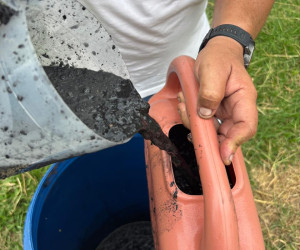
Biochar is a strategic input for restoring degraded soils and addressing climate change. This carbon-rich material is produced through pyrolysis—a “smoldering combustion” process in which biomass (such as tree prunings or seed husks) is heated to high temperatures in an oxygen-deprived environment. Unlike conventional burning, this technique stabilizes carbon in a highly persistent form, preventing it from rapidly returning to the atmosphere.
The concept is inspired by the Amazon’s “Terras Pretas de Índio”, highly fertile soils resulting from ancestral management practices. Modern science has transformed this logic into a precise carbon sequestration technique: while conventional organic matter (such as leaves and manure) decomposes rapidly and releases greenhouse gases, biochar exhibits high chemical stability. Due to its resistance to microbial degradation, it acts as a long-term carbon reservoir, capable of remaining stored in the soil for hundreds of years.Physically, its high porosity allows it to may function as a “sponge,” making it ideal for both agriculture and forest restoration. This characteristic enhances moisture retention and nutrient adsorption (uptake), reducing losses due to leaching and acting as an on-demand reservoir for vegetation. In addition to correcting acidity and supporting the microbiome, the material reverses the physicochemical limitations of degraded soils, enabling better root development.
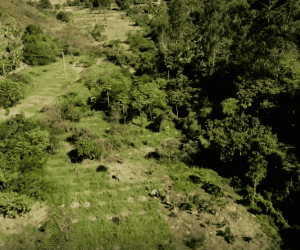
Recent studies conducted in Atlantic Forest areas in Rio de Janeiro, with the participation of IIS researchers, show promising results for the application of biochar. In nursery experiments, the material helped native tree seedlings, such as Senna multijuga and Trema micranta, perform better. Globally, the number of scientific publications on the topic has been growing. Countries like China and the United States lead the research, but Brazil plays a key role due to its vast agricultural and forestry potential.
One of the main debates among scientists is how to accurately quantify carbon sequestration in the soil. This refinement is a fundamental step toward integrating biochar into carbon credit markets with the necessary transparency and security.
Despite the benefits, the use of biochar still faces the challenge of scale: technologies and processes must be made economically accessible to rural producers. The goal is to consolidate circular economy models that transform biomass residues into strategic resources, promoting soil functionality, food security, and long-term climate resilience.