


News > News
09.10.26
SOBRE2026: IIS Participates in Brazil’s Leading Ecological Restoration Conference
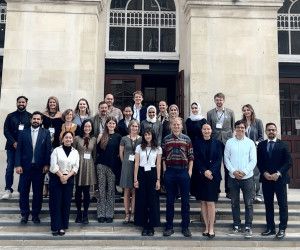
From July 27 to 31, 2026, ten staff members from the International Institute for Sustainability (IIS) participated in the 6th Brazilian Conference on Ecological Restoration (SOBRE2026), held at the University of Brasília (UnB), in Brasília, Federal District.
Under the theme “Ecological Restoration: Inclusion and Climate Justice,” the event brought together more than 1,700 researchers, restoration practitioners, public officials, companies, funders, Indigenous Peoples, and traditional communities, consolidating its position as Brazil’s leading forum for discussing scientific, technical, and institutional advances in ecological restoration.
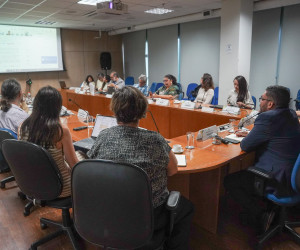
Throughout the five-day program, the IIS delegation participated in field visits, lectures, workshops, roundtable discussions, and scientific presentations, reinforcing the institution’s commitment to advancing applied science in ecological restoration and developing solutions that support biodiversity conservation, ecosystem recovery, and public policymaking.
SOBRE’s Role in Ecological Restoration in Brazil
IIS is an institutional member of the Brazilian Society for Ecological Restoration (SOBRE), the organization responsible for the conference and one of the country’s leading institutions promoting scientific research and best practices in ecological restoration.
With a mission to strengthen scientific research, disseminate knowledge, and inform public policies aimed at restoring Brazilian ecosystems, SOBRE brings together researchers, professionals, and institutions from across the country. It also promotes collaboration through biome-based regional networks, which advance the restoration agenda in different regions of Brazil:
– Atlantic Forest Restoration Pact;
– Alliance for Restoration in the Amazon;
– Cerrado Restoration Network (Araticum);
– Southern Ecological Restoration Network;
– Caatinga Restoration Network;
– Pantanal Restoration Pact.
These regional networks connect scientific research with the specific challenges of each biome, facilitating knowledge exchange, the development of solutions adapted to Brazil’s diverse ecological and socioeconomic contexts, and the implementation of ecological restoration at a national scale.
IIS Participation
During the conference, IIS staff members presented research through poster and oral sessions, highlighting the institution’s different areas of work in applied science for ecosystem conservation and restoration.
Assisted Natural Regeneration in Brazil: A Conceptual Synthesis and Empirical Evidence from a Meta-Analysis
IIS Sustainability Analysts Luisa Liévano and Artur Malecha, together with collaborators, presented scientific evidence on Assisted Natural Regeneration (ANR) in Brazil.
The study provides a comprehensive review of Brazilian scientific literature on ANR, synthesizing evidence of its effectiveness as a strategy for restoring ecosystems across the country. The research compares outcomes from different restoration approaches, examines factors influencing ANR success, and identifies research gaps and biases to inform scientific and policy recommendations.
The findings also contributed to an unprecedented resolution establishing technical guidelines for ANR in Brazil, approved by the National Commission for the Recovery of Native Vegetation (Conaveg) on March 31, 2026.
Scenarios of Water Regulation Ecosystem Services in Protected Areas of the Serra da Mantiqueira
IIS Institutional Engagement Lead Bruna Pavani and collaborators presented a study on the provision of water regulation ecosystem services.
The research assessed different land-use and land-cover scenarios to examine how forest conservation and restoration influence ecosystem services related to water regulation, erosion reduction, and sediment retention in the Serra da Mantiqueira region.
The findings demonstrate the strategic role of protected areas in maintaining water resources and provide evidence to support land-use planning and ecosystem-based adaptation measures.
Integrating Climate Change and Ecosystem Services into Ecological Restoration Efforts: A Systematic Review.
IIS Sustainability Analyst Luiz Conrado-Silva and collaborators presented an analysis of how ecological restoration, climate change, and ecosystem services are integrated into international scientific literature.
The study combines a systematic review and a scientometric analysis to assess the current state of research connecting these three areas. In addition to mapping the main approaches, methods, and geographic regions covered by existing studies, the research compared publications that incorporate climate variables into restoration outcome assessments with those that do not yet consider this dimension.
The findings indicate that the integration of these three topics remains relatively recent and concentrated in a limited number of countries, revealing significant knowledge gaps.
Luiz Conrado-Silva also served as moderator of this collaborative session focused on exchanging experiences and knowledge.
The activity brought together research on ecological restoration and organized discussions around four thematic areas: land-use planning, species selection, ecosystem processes, and financing.
At the end of the session, participants contributed ideas on solutions and tools to support restoration initiatives, fostering collective approaches to improving the effectiveness of ecological restoration in Brazil.
Knowledge Exchange Circle: Productive Restoration — Perspectives from Family Farming
IIS Field Operations Director Almir Jacomelli contributed to discussions on productive restoration from the perspective of family farming.
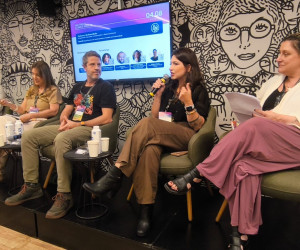
In addition to the scientific presentations, Jacomelli participated as a panelist in a discussion aimed at identifying and understanding the challenges, opportunities, and perspectives of family farmers involved in productive restoration.
The session emphasized the importance of integrating ecological, social, and economic considerations into restoration strategies, promoting approaches that combine biodiversity conservation, income generation, food security, and territorial development.
Science, Innovation, and Collaboration
SOBRE2026 provided an important platform for exchanging knowledge and experiences among stakeholders involved in ecological restoration.
For IIS, the conference offered an opportunity to share scientific findings, strengthen institutional partnerships, expand dialogue with different stakeholders in the restoration sector, and follow the latest advances in restoration research and implementation in Brazil.
The participation of a ten-member delegation also reinforced the institution’s commitment to collaboratively developing solutions that can accelerate ecological restoration across the country.
“By bringing together science, innovation, and institutional collaboration, our participation in SOBRE2026 reaffirms IIS’s commitment to translating scientific knowledge into practical solutions to accelerate ecological restoration in Brazil. The event also provided a valuable opportunity to strengthen partnerships and reconnect with collaborators, expanding dialogue and knowledge exchange,” said Aline Rodrigues, IIS Nature-based Solutions Lead.