









News > News
02.07.26
Ecological connectivity: what is it and why it matters
By Luisa Liévano, Sustainability Analyst at IIS
Ecological connectivity has become increasingly prominent in global environmental discussions as biodiversity loss continues to accelerate. Rather than focusing solely on protecting isolated natural areas, scientific evidence shows that the long-term health of ecosystems depends on maintaining or restoring connections between habitat fragments in landscapes that have been increasingly altered by human activities.
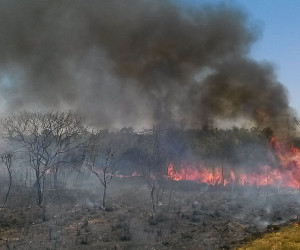
Today, land-use change is the leading driver of biodiversity loss, causing habitat degradation and fragmentation. These processes disrupt essential ecological flows, including species movement and genetic exchange, ultimately reducing ecosystem resilience. According to the Intergovernmental Science-Policy Platform on Biodiversity and Ecosystem Services (IPBES), integrating conservation, restoration and spatial planning is essential to prevent biodiversity loss and ensure the sustainable use of nature.
Against this backdrop, ecological connectivity has emerged as one of the most important tools for addressing the biodiversity crisis. The concept refers to the ability of species to move and interact across fragmented landscapes, a key factor for species survival, adaptation and the maintenance of ecological processes that sustain life on Earth.
In Brazil, home to one of the world’s richest biodiversities, the challenge is even greater. Thousands of species are threatened with extinction, with habitat destruction remaining the primary driver. Ensuring ecological connectivity is therefore not only a conservation strategy but also a prerequisite for maintaining essential ecosystem services such as climate regulation, water security and food production.
Recent research conducted by the International Institute for Sustainability (IIS) contributes to this discussion by providing a scientific basis for territorial planning. The study Planning for the Restoration of Functional Connectivity in Brazil, published in the Journal of Biogeography, presents the first nationwide assessment of how ecological restoration can maximise connectivity across all Brazilian biomes.
The study adopts an innovative approach. Rather than treating restoration as a uniform process, it identifies the areas with the greatest potential to reconnect ecosystems. To achieve this, the researchers combined species-specific perspectives with advanced spatial modelling and prioritisation algorithms, analysing the contribution of every restorable pixel to functional connectivity. Because different species perceive landscapes differently, functional connectivity varies according to each species’ movement capacity and ecological requirements.
In practice, this means that not all degraded areas have the same strategic value. Restoring specific locations can generate significantly greater gains for ecological connectivity than scattered restoration efforts. The findings show that transition zones between biomes—such as the Cerrado, Caatinga and Atlantic Forest—and heavily pressured regions such as the Amazon deforestation arc hold particularly high potential for reconnecting ecosystems.
The research also demonstrates that connectivity differs according to species’ dispersal abilities. Highly mobile species are often able to maintain connections even in fragmented landscapes, while others depend directly on ecological corridors. These differences reinforce the need for restoration planning based on multiple ecological scenarios rather than a one-size-fits-all approach.
Beyond biodiversity conservation, ecological connectivity also plays a critical role in climate action. Connected ecosystems are generally more resilient to climate change, allowing species to shift their distribution in response to changes in temperature and rainfall patterns. At the same time, strategically restoring ecosystems can increase carbon sequestration while strengthening the ecosystem services that support human well-being.
The IIS approach aligns closely with international recommendations. IPBES highlights integrated spatial planning—including ecological connectivity—as a fundamental strategy for aligning biodiversity, climate and sustainable development policies. The platform’s current methodological assessment seeks to evaluate how integrated spatial planning and ecological connectivity can help prevent biodiversity loss driven by land- and sea-use change. As an IPBES Fellow, I have the opportunity to contribute to this assessment.
From an economic perspective, ecological connectivity is equally relevant. Global studies indicate that biodiversity loss generates increasing costs for society, while ecosystem conservation and restoration provide direct and indirect benefits across multiple sectors.
In Brazil, where highly preserved ecosystems coexist with regions under intense environmental pressure, ecological connectivity represents a bridge between conservation and sustainable development. This is particularly important in the Atlantic Forest, one of the world’s most fragmented biodiversity hotspots, where prioritising restoration in strategically located areas can substantially improve landscape connectivity.
More than simply expanding protected areas, the challenge is to reconnect landscapes. In this context, ecological connectivity is no longer just a technical concept—it is a central strategy for conserving biodiversity and advancing Nature-based Solutions at scale.