




News > News
17.04.26
Conaveg Approves Resolution on Assisted Natural Regeneration, Developed with Support from IIS
On March 31st, the National Commission for the Recovery of Native Vegetation (Conaveg) approved a resolution establishing technical guidelines for the application of Assisted Natural Regeneration (ANR) as a strategy for the recovery of native vegetation on a national scale.
The drafting of the resolution was led by the Ministry of the Environment and Climate Change (MMA), through the National Secretariat for Biodiversity, Forests, and Animal Rights, with technical collaboration from IIS. The process of drafting the resolution was conducted in a participatory manner, involving consultations with experts from different Brazilian biomes, workshops, and rounds of technical review.
The resolution represents a significant step forward, as it consolidates definitions, guides technical implementation, and promotes greater certainty for the adoption of the RNA in different territorial contexts.
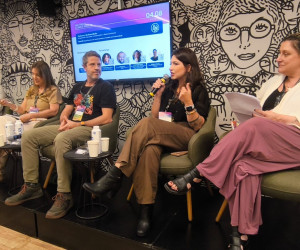
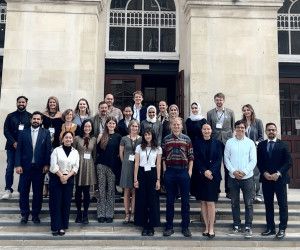
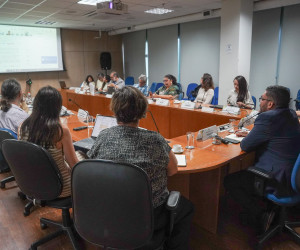
The document was approved during Conaveg’s first Ordinary Meeting of 2026, held at the MMA headquarters in Brasília in a hybrid format, with the participation of Isabelle Pepe, Sustainability Analyst at IIS, and Carlos Alberto Scaramuzza, Senior Specialist at IIS.
What the resolution says
The resolution defines NBR as a set of methods that seek to reduce or eliminate degradation factors, promote natural regeneration processes, and accelerate ecological succession in areas with recovery potential. Recognized as an intermediate intervention method, NBR can be applied in isolation or combined with other methods, thereby increasing its effectiveness and cost-efficiency.
In addition to establishing key definitions—such as degradation factors, natural regeneration potential, and integrated landscape management—the regulation provides guidelines and technical guidance for the diagnosis, implementation, and monitoring of RNA, with recommendations for ecological and socioeconomic indicators. The content was designed to be flexible, with an adaptive approach capable of covering all Brazilian biomes and grounded in science.
The resolution also reinforces the role of RNA in the conservation of secondary vegetation and the promotion of landscape connectivity, aligning with the goals of the National Plan for the Recovery of Native Vegetation (Planaveg 2025–2028).
Implementation Challenges
IIS researchers Isabelle Pepe, Carlos Alberto Scaramuzza, Tatiana Botelho, and Aline Rodrigues wrote an article on the new resolution, which was published in Reset. For them, the regulation, “more than a technical document, is a declaration that Brazil recognizes the complexity of natural cycles as a fundamental element in the restoration equation and encourages its practical application.”
The authors also point out that the challenge now is to translate these guidelines into on-the-ground actions, which involves, among other factors, defining technical indicators tailored to each biome and providing technical training.
The IIS’s participation is part of the project “Facilitating the Expansion of Assisted Natural Regeneration in Brazilian Ecosystems,” which is supported by the Bezos Earth Fund. Learn more about the project.