











News > News
14.05.26
EU–Mercosur Agreement: A Milestone in Global Trade Takes Effect with Structural Advances in Environmental Governance
It is now official: the EU–Mercosur Partnership Agreement entered into provisional force in early May, bringing more than 26 years of negotiations to a close and ushering in a new phase in relations between the two blocs. The agreement marks the creation of one of the world’s largest free trade areas, connecting 720 million people and economies with a combined GDP of more than US$22 trillion.
However, reducing the agreement to its economic dimension alone fails to capture its broader significance. The treaty between the EU and Mercosur emerges at a time marked by climate crises, ecological collapse, geopolitical tensions, and profound transformations in global production chains. In this context, it is more than a trade agreement: it is also a potential instrument for territorial and environmental governance.
According to the article The European Union-Mercosur Free Trade Agreement as a Tool for Environmentally Sustainable Land Use Governance,
authored by IIS researchers, the agreement introduces a new institutional layer to the relationship between trade and sustainability by combining environmental commitments, regulatory cooperation, and mechanisms for monitoring production chains across both regions.
The agreement also reinforces existing environmental commitments, including the implementation of the Paris Agreement, forest protection measures, and compliance with multilateral climate and biodiversity accords. These commitments are consolidated in a dedicated chapter on Trade and Sustainable Development. Despite its known limitations, the agreement creates a legally stable institutional platform for cooperation and for the joint implementation of initiatives between two regions that are central to the planet’s climate future.
Why does this initiative matter for Brazil’s environment?
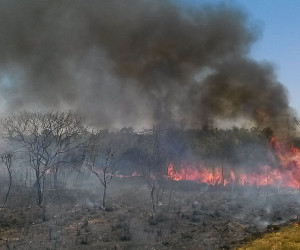
Because land conversion in Brazil and other Mercosur countries is not an isolated phenomenon. It is deeply embedded in global value chains and in the consumption patterns of the European Union itself. In this sense, deforestation is no longer merely a local issue; it becomes a systemic consequence of globalized production and trade models.
The agreement therefore functions as an additional tool for promoting sustainable land use within a multilevel governance framework that integrates trade, environmental regulation, climate commitments, public policies, and territorial monitoring.
The policy brief The European Union-Mercosur Trade Agreement: a solution for trade-related habitat loss in Brazil?,
produced by IIS, highlights that the agreement’s environmental impacts stem not only from the potential increase in trade flows, but also from the continued interconnection between agricultural expansion, land use, and global demand chains. The study also warns that the agreement could intensify pressure on certain territories if it is not accompanied by robust land-use planning policies, effective enforcement, and the restoration of degraded areas.
This trend is reinforced by European regulations such as the EU Deforestation Regulation, which requires traceability and proof that imports are not linked to illegal deforestation. Combined with the EU–Mercosur agreement, this regulatory framework repositions international trade as part of the solution for building more sustainable production chains.
New European and British regulations on deforestation-free supply chains are also likely to redefine global standards for competitiveness and market access by expanding requirements related to traceability, transparency, and environmental due diligence.
In this scenario, sustainability ceases to function merely as an environmental agenda and becomes a core component of the criteria for international economic integration, according to the study The European Union and United Kingdom’s deforestation-free supply chains regulations: Implications for Brazil, also produced by IIS as part of the Trade Hub initiative.
An Alternative Path and Geopolitical Repositioning
The EU–Mercosur agreement can also be understood as a concrete opportunity for geopolitical repositioning in a world increasingly shaped by instability and trade tensions. By diversifying partnerships and reducing strategic dependencies, Europe strengthens its autonomy, while Mercosur gains a more prominent place on the global stage.
None of these outcomes, however, will occur automatically. The agreement’s real impact will depend on implementation: monitoring, transparency, traceability, territorial governance, land-use control, and institutional strengthening. Without these elements, environmental commitments risk remaining merely declaratory.
At a time of growing pressure on forests, natural resources, and territories, the agreement should not be seen as the end of the story, but rather as the beginning of a new chapter, one that will shape how the world organizes its production systems, geopolitical alliances, and relationship with nature in the decades ahead.