






News > News
02.07.26
IIS hosts discussion on urban resilience and launches guide for environmental disaster risk management
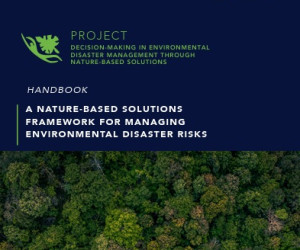
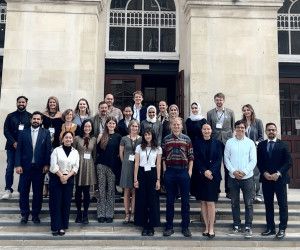
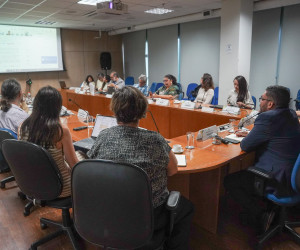
IIS hosted the event “Science for Climate Resilience: Nature-based Solutions for Resilient Cities” on 18 May 2026, bringing together around 60 representatives from government, academia and civil society to discuss the role of science in shaping climate adaptation policies and reducing environmental disaster risks. During the event, IIS also launched the Guide to Environmental Disaster Risk Management through Nature-based Solutions (NbS), developed in partnership with Swiss Re.
Opening the event, IIS Executive Director Agnieszka Latawiec highlighted that it was the first public event held at the institute’s new headquarters. The new space was designed to foster dialogue and collaborative solutions for climate resilience and Nature-based Solutions, she reinforced.
“We need to strengthen our ability to translate scientific knowledge into practical tools for territorial planning, climate adaptation and vulnerability reduction”..
Bringing science into public decision-making
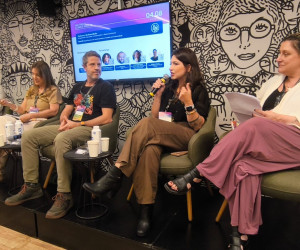
The first panel focused on integrating scientific evidence into public climate adaptation policies. Larissa Costa, Superintendent for Resilient Cities at the Rio de Janeiro State Secretariat for Environment and Sustainability (SEAS), argued that the main challenge is no longer producing technical information, but incorporating it into planning, budgeting and public decision-making.
“The challenge today is not simply producing information, but integrating these data into planning, budgeting and public-sector decision-making,” she said.
Costa also presented initiatives led by the State Government on ecological restoration, water resource conservation and climate resilience. Among them, she highlighted the Resilient Environment Programme, created after the disasters in Petrópolis to strengthen the technical and institutional capacity of municipalities to prepare for and respond to extreme climate events.
Nature-based Solutions for disaster risk management
The second panel featured Stella Manes, IIS Biodiversity Lead, who presented the Guide to Environmental Disaster Risk Management through Nature-based Solutions. The publication introduces an analytical approach developed by IIS to identify priority areas for restoration and conservation in the state of Rio de Janeiro, considering ecosystem services such as flood regulation, thermal comfort and coastal protection.
“The work combines spatial modelling, climate scenarios, and cost-benefit analysis to support decision-making and strengthen climate adaptation strategies. Investing in nature means investing in climate adaptation. Nature-based Solutions are a practical strategy to increase the resilience of territories,” she said.
Evidence-based planning for resilient cities
The panel “Resilient Green and Blue Cities: Evidence-based Adaptation and Nature-based Solutions” was led by Raquel Cruz, professor at PUC-Rio and co-author of the Synthesis Report of the Brazilian Centre for the Synthesis of Environmental and Climate Change. During her presentation, she discussed the impacts of conventional urban development on the water cycle and defended the integration of green infrastructure and Nature-based Solutions into urban planning.
The event finshed with a discussion on how scientific knowledge can support territorial planning and climate risk management, reinforcing the need for stronger collaboration between researchers, policymakers and practitioners to build more resilient cities