





News > News
23.12.25
IIS in 2025: highlights of the year
2025 was a year of synthesis, consolidation and forward-looking ambition. While advancing into new frontiers of science applied to sustainability, IIS celebrated, in December, 16 years of work connecting scientific knowledge, territory and real-world impact.
It was a year in which the questions that have guided us since 2009 found new answers and posed new challenges.
The experience accumulated over 16 years strengthened our capacity to translate scientific evidence into concrete solutions for biodiversity conservation, ecosystem restoration and the development of viable pathways towards a nature-positive economy.
In this retrospective, we bring together some of the key lessons from 2025 — a year that not only marked another cycle of work, but also reaffirmed IIS’s commitment to the future: delivering science with purpose, relevance and scale, from Brazil to the world.
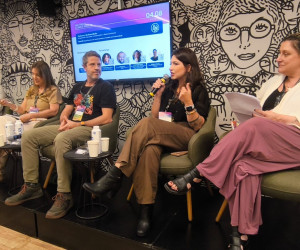
One of the main highlights of 2025 was our engagement at COP30 in Belém, in November. IIS hosted the House of Restoration in the Blue Zone, welcoming more than 120 panellists across over 30 events. Discussions focused on key themes related to climate, biodiversity and restoration.
In the same month, IIS founder and Executive Director of Science, Bernardo Strassburg, received the 2025 Earthshot Prize — often referred to as the “Oscars of Sustainability” as founder of re.green. In July, IIS was also recognised with the MapBiomas Award in the Climate Emergency category.
Our 2025 agenda also included the events “Ecosystem restoration and the challenges of Rio-92: integrating Climate, Biodiversity and Land Degradation”, held during Rio Climate Action Week in August, and “Restoration at the crossroads: linking global and urban recovery for a climate-resilient future”, organised in partnership with Senckenberg Nature Research (Germany) in September.
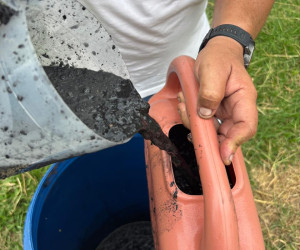
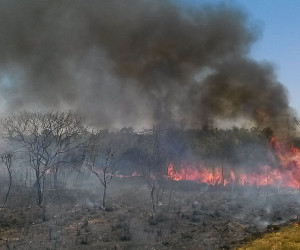
In 2025, IIS launched seven new projects, ranging from spatial modelling of wildfire risk to strengthen the long-term permanence of restored areas; sustainable soil management and its role in food production and climate mitigation; promoting ecosystem restoration as a tool for climate transition in land use; technical support to inform the Climate Plan; reviewing data and criteria to prioritise areas for the State Programme for Payments for Environmental Services in Pará; expanding Assisted Natural Regeneration in strategic biomes; and adapting biodiversity net gain metrics for terrestrial ecosystems.
Throughout the year, we published original studies, analyses, reports and articles addressing topics such as the design of climate-resilient biodiversity credits, and the role of Nature-based Solutions in climate mitigation and adaptation. We also produced robust analyses on the potential of forest restoration to generate jobs, foster economic growth and conserve thousands of species.
IIS’s work also contributed directly to Brazil’s Climate Plan by providing technical inputs to sectoral mitigation and adaptation plans, while supporting specific territorial agendas, including agro-environmental development in Tocantins and strategies to reduce legal deforestation in the Cerrado.
This portfolio is complemented by innovative reflections on ecological connectivity planning, sustainable futures scenarios, desertification and drought, and the integration of climate change and biodiversity — reinforcing the role of strategic ecosystem restoration as a central pathway to reduce climate risks.
IIS wasalso as a source of expertise for national media coverage, with features highlighting our work on restoration, climate and public policy in outlets such as Jornal Nacional, Valor Económico and O Globo.
Our digital presence continued to grow, with more than 100 posts reaching approximately 350,000 views across our Instagram, X, Facebook and LinkedIn channels, alongside a 20% increase in followers. These publications aimed not only to showcase IIS’s work, but also to foster broader public debate on sustainability.
Perspectives for 2026
The outcomes of 2025 consolidated the integration of science, public policy and territorial practice. IIS will continue to contribute to environmental governance processes, expand the evidence base for public policy, and collaborate with national and international partners across climate, biodiversity, sustainable land use and ecological restoration agendas.
We wish everyone a prosperous and successful 2026.