


About IIS > Internal collaborator
Fernanda Gomes
Knowledge Management and Communications Manager
Fernanda holds a degree in Biology from the Federal University of Rio de Janeiro, a Master’s degree in Sustainability Science from PUC-Rio and a Master’s degree in Communication for Marketing from the University of Westminster, United Kingdom. She is currently a Master’s candidate in Economics at UFRJ.
At IIS, she serves as Research Projects Coordinator, with a focus on ecological economics, behavioural economics, and environmental economics. Her research centres on the economic viability of conservation and ecological restoration, financial instruments for biodiversity conservation, and behavioural strategies to reduce deforestation and promote sustainable land use. Her work reflects an interdisciplinary approach at the interface of science, economics, and public policy.
Related Content
03.07.25
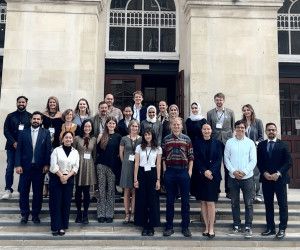
IIS delivers talk on behavioural sciences applied to conservation at the Behavioural Transformations 2025 conference in London
Ecosystem Restoration as an Opportunity for Climate Transition in Land Use in Brazil
Executive Summary: Solutions and Strategies for Reducing Legal Deforestation in the Cerrado
Assisted Natural Regeneration Expansion in Brazilian Ecosystems
Metrics for Net Biodiversity Gain in Terrestrial Ecosystems
Biodiversity credits: a promising financial solution for sustainable and deforestation-free agriculture
Priority Areas for Native Vegetation Restoration in Brazil
The Atlantic Forest Trail: Restoring Productive Landscapes in the Guanabara Reconcave
09.02.24
Video: Regulations, Agro-Commodity Production, and Zero Deforestation
16.10.23
The carbon market: an opportunity to control deforestation caused by agricultural expansion in Brazil
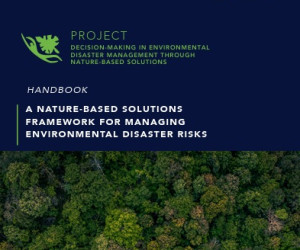
Framework to guide the mitigation of environmental disasters through Nature-based Solutions
Impact Report 2022
09.08.23
ACHIEVING AGRICULTURAL SUSTAINABILITY IN MATOPIBA
Executive summary: Mental maps of rural producers on land use change in MATOPIBA
Biochar and Forage Peanut improve pastures: Evidence from a field experiment in Brazil
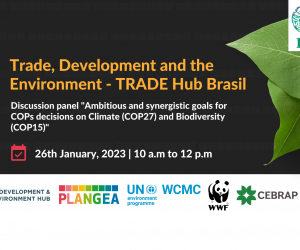
17.01.23
Video: discussion panel “Ambitious and synergistic goals for COPs decisions on Climate (COP27) and Biodiversity (COP15)”
16.01.23
The cerrado seen from a 4-wheel drive
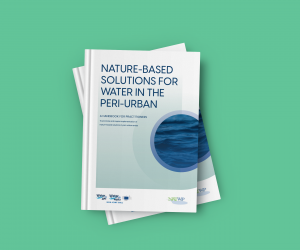
NATWiP Handbook – A handbook for practitioners to promote and inspire implementation of nature-based solutions in peri-urban areas

Stepping on invisible land: on the importance of communicating the value of soils
Framework for Planning and Evaluation of Nature-Based Solutions for Water in Peri-Urban Areas
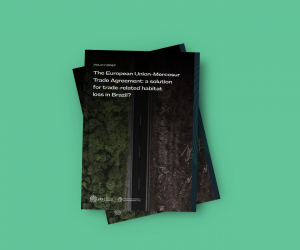
Policy Brief: The European Union-Mercosur Trade Agreement: a solution for trade-related habitat loss in Brazil?
Behavioral Sciences applied to a sustainable soy chain
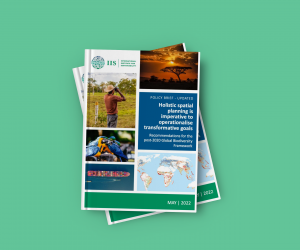
Holistic spatial planning is imperative to operationalise transformative goals: recommendations for the post-2020 Global Biodiversity Framework
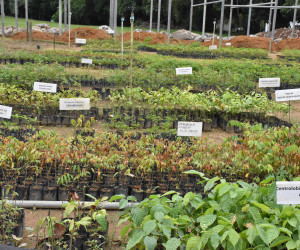
On the Atlantic Forest trail: restoring landscapes and strengthening local production chains in the Central Fluminense Mosaic
More effort is needed to implement and disseminate soil protection measures for tropical soils
Expertise on #23 – Integrated approach: better choices for restoring ecosystems
15.04.21
Winners of the contest “SUSTAINABILITY: What does it mean to you?”
Guidelines for Forest Landscapes Restoration in the Brazilian Atlantic Forest and Amazon
Summary for public policies: prioritizing areas for forest recovery in the Brazilian Atlantic Forest
Summary for public policies: prioritizing areas for forest recovery in the Brazilian Amazon
Frontiers in Ecology and Evolution: Local Perception in Forest Landscape Restoration Planning: A Case Study From the Brazilian Atlantic Forest
01.03.21
Earth Optimist Brazil 2021
09.02.21
2020 in retrospective
Games and the Communication of Ecosystem Services to Non-Scientific Audiences
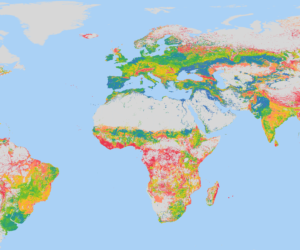
PLANGEA: Strategic Land Use Planning